Key Takeaways
- Active duty service members and many dependents can access free legal help through on-base Judge Advocate General (JAG) legal assistance offices at virtually every installation.
- JAG attorneys handle a wide range of civil legal matters including wills, powers of attorney, SCRA protections, family law questions, landlord-tenant disputes, and consumer issues — all at no cost.
- Veterans who are no longer on active duty have access to dedicated civilian programs including VA-funded legal aid, pro bono networks, and nonprofit organizations.
- If your JAG office can’t handle your specific case, they can refer you to civilian attorneys through bar association programs — often at no charge to junior enlisted members.
- All conversations with legal assistance attorneys are strictly confidential — protected by attorney-client privilege regardless of your rank or branch.
Legal problems don’t wait for a convenient time. A deployment order lands and you suddenly need a will or power of attorney. A landlord tries to keep your security deposit after a PCS move. A creditor calls your command over a debt dispute covered by federal law. These situations are stressful enough without worrying about attorney fees on a junior enlisted salary.
The good news: the U.S. military has one of the most robust free legal assistance systems in the country. Whether you’re active duty, a veteran, or a military family member, there are programs designed specifically to help you navigate legal challenges without opening your wallet. This guide breaks down what’s available, who qualifies, and exactly how to access it.
Table of Contents
- What Is JAG Legal Assistance?
- Who Qualifies for Free Military Legal Help
- What JAG Legal Assistance Covers
- What JAG Cannot Help With
- How to Access Legal Assistance on Base
- Free Legal Help Beyond JAG: Veteran Programs
- The ABA Military Pro Bono Project
- SCRA and MLA: Your Legal Protections Explained
- Legal Documents You Need Before Deployment
- Frequently Asked Questions
What Is JAG Legal Assistance?
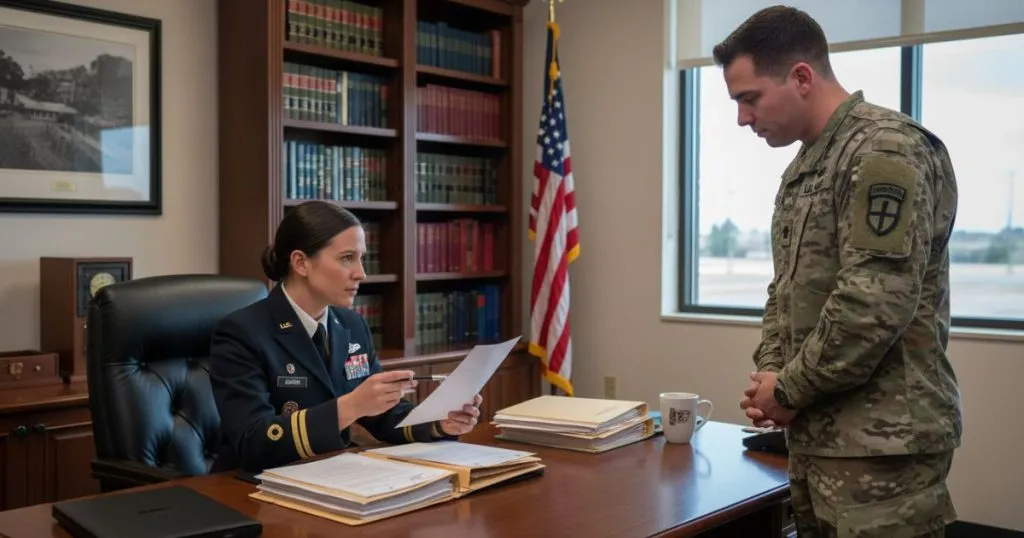
Judge Advocate General (JAG) officers are military attorneys — commissioned officers who are also licensed lawyers. Every branch of the U.S. military has its own JAG Corps, and each maintains legal assistance offices at almost every base, post, and installation worldwide.
These offices exist specifically to help service members, retirees, and their families handle personal civil legal matters. The mission is tied directly to military readiness: when a service member is worried about a custody dispute, a predatory loan, or an unsigned will, it affects their focus and performance. JAG legal assistance addresses that problem at no cost to the service member.
JAG attorneys are bound by the same professional rules of conduct as any civilian attorney. That means attorney-client privilege applies fully — no superior officer can order a JAG attorney to disclose what you discussed in a legal assistance appointment.
Who Qualifies for Free Military Legal Help
Eligibility for JAG legal assistance is broader than many service members realize. Generally, the following individuals are eligible:
- Active duty service members of any branch (Army, Navy, Air Force, Marine Corps, Coast Guard, Space Force)
- National Guard and Reserve members when on Title 10 federal orders (eligibility during non-activated periods varies by installation and branch)
- Retired military members with a valid military ID
- Dependents (spouses and minor children) of active duty members, retirees, and those who died on active duty, when entitled to a military ID card
- DoD civilian employees deployed overseas for more than 30 days (limited to wills and powers of attorney in many cases)
- Surviving spouses of service members who died on active duty
Priority for appointments typically goes to those with the most urgent needs — service members preparing for deployment, junior enlisted members with limited financial resources, and victims of crimes. If you have questions about your specific eligibility, contact the legal assistance office at the nearest installation.
What JAG Legal Assistance Covers
The range of civil legal matters JAG offices can assist with is substantial. While services vary somewhat by branch and installation, most legal assistance offices handle:
Estate Planning and Family Documents
- Wills — including wills with testamentary trusts
- Powers of attorney — special and general; military powers of attorney carry special federal status and are exempt from many state-specific requirements
- Advance medical directives (living wills)
- Notary services
Family Law
- Divorce and separation advice (note: JAG can advise on rights, but typically cannot represent you in civilian court)
- Child custody and support guidance
- Adoption and name change advice
- Domestic violence resources and referrals
Consumer and Financial Issues
- Creditor harassment and debt disputes
- Predatory lending and consumer fraud
- Landlord-tenant disputes, including improper lease terminations
- Car dealer and contractor disputes
- Bankruptcy advice and referrals
- Tax questions (and referrals to free tax preparation services)
Military Legal Rights
- Servicemembers Civil Relief Act (SCRA) advice — interest rate caps, lease terminations, foreclosure protections, and more
- Military Lending Act (MLA) compliance issues
- Benefits and entitlement questions
- Immigration and naturalization assistance for military members and their families
Other Civil Matters
- Contracts review
- Minor criminal matters such as traffic infractions (advice only — not representation)
- Special education rights under IDEA (for dependents)
What JAG Cannot Help With
JAG legal assistance has important limitations that service members should understand before their appointment:
- Criminal defense: If you are the subject of a military criminal investigation or UCMJ proceedings, you need a defense attorney from the Trial Defense Service (TDS) or an Area Defense Counsel (ADC) — not a legal assistance attorney. These are separate JAG functions.
- Civilian court representation: JAG attorneys generally advise but do not appear in civilian courts on your behalf. They can prepare documents and explain your rights, then refer you to civilian attorneys when representation is needed.
- Business matters: Legal assistance covers personal civil legal matters, not business disputes or business formation.
- Conflicts of interest: If both you and another eligible person have opposing interests in the same legal matter, only the person who established the attorney-client relationship first can be served by that office. The other party will be referred elsewhere.
When JAG can’t handle your specific situation, they won’t just turn you away. Legal assistance offices are required to refer you to other resources — often through local bar association lawyer referral services or specialized pro bono programs.
How to Access Legal Assistance on Base
Getting an appointment is straightforward. Here’s how the process typically works:
- Locate your installation’s legal assistance office. Each branch maintains a directory. The Army JAG Legal Assistance office locator and Navy JAG Corps both have searchable directories. Air Force and Space Force members should check their base legal office through their installation’s official website.
- Call ahead or check walk-in hours. Some installations accept walk-ins for simple matters like notary services or powers of attorney; others require appointments for consultations. Wait times can vary significantly by installation size.
- Bring your military ID and relevant documents. For estate planning appointments, have your Social Security number, family member information, and any existing legal documents. For consumer or landlord issues, bring contracts, correspondence, and any written notices.
- Be prepared to describe your situation clearly. The attorney will evaluate whether your matter falls within their scope and advise next steps — including referrals if needed.
If you’re stationed overseas or at a remote location, Military OneSource provides referrals to legal assistance resources and can connect you with attorneys by phone or video for some matters.
Free Legal Help Beyond JAG: Programs for Veterans
Veterans who have separated from service have a different set of options. JAG offices on active installations do serve retirees, but most veterans — especially those who served less than 20 years — will need to turn to civilian programs. Fortunately, the civilian legal aid landscape for veterans has expanded significantly in recent years.
VA Legal Services for Veterans (LSV-H)
The VA’s Legal Services for Veterans grant program funds nonprofit organizations to provide free civil legal services to veterans experiencing or at risk of homelessness. VA has awarded up to $500,000 in grant funding to 92 eligible organizations for a two-year grant cycle beginning October 1, 2025. Services include housing law, VA benefits appeals, family law, debt issues, and discharge upgrade requests.
VA Office of General Counsel Legal Clinics
The VA’s Office of General Counsel maintains a directory of pro bono legal clinics, many located within VA medical centers. This is often the best starting point for a veteran trying to understand what help is available in their area.
National Veterans Legal Services Program (NVLSP)
The National Veterans Legal Services Program (NVLSP) is a nonprofit advocacy organization that provides free legal representation to veterans in VA claims and appeals, discharge upgrade cases, and medical retirement matters. They maintain the Veterans Benefits Manual, a comprehensive resource used by attorneys and VSOs nationwide, and have a strong track record of successful litigation on behalf of veterans.
TRENDING: See Today’s VA Loan Rates
VetsLegal
VetsLegal provides free legal support to homeless, at-risk, disabled, and low-income veterans, offering both in-person and virtual sessions covering housing, healthcare access, and employment-related legal issues.
State-Level Veteran Legal Aid Programs
Many states fund their own veteran legal assistance programs. These are particularly valuable for civil matters governed by state law — landlord-tenant disputes, family law, and consumer protection cases. A few examples:
- Texas: Texas Lawyers for Texas Veterans (TLTV) connects veterans with volunteer attorneys statewide through local bar associations
- New Jersey: Volunteer Lawyers for Justice Veterans Legal Program offers clinics and direct representation
- Connecticut: Connecticut Veterans Legal Center provides free legal assistance for housing, healthcare, income, and recovery barriers
- Utah: Utah@EASE connects veterans with pro bono attorneys through a partnership between the state Attorney General’s Office and the Utah State Bar
To find programs in your state, start with your state’s Department of Veterans Affairs or Veterans Services Office website, or search the VA OGC’s legal clinic directory.
The ABA Military Pro Bono Project
If your JAG attorney or legal aid organization determines that your situation requires civilian attorney representation beyond what they can provide, they may refer you to the ABA Military Pro Bono Project.
Want updates when benefit rates change?
Join thousands of service members who get our free weekly briefing.
By subscribing you agree to receive email from USMilitary.org and Military.net. Unsubscribe anytime. We don't sell your email address or give it to anyone for their marketing. Privacy Policy.
This program places civil legal cases from junior enlisted active duty service members with volunteer civilian attorneys at no charge. The Project currently accepts servicemembers at a paygrade of E-6 and below, and accepts cases in consumer law (including bankruptcy), employment, family law, guardianship, landlord-tenant, special education, tax law, and trusts and estates.
A few important notes about this program:
- You cannot contact the Project directly — referrals come through your JAG legal assistance attorney
- Your case must be meritorious and represent a genuine legal need
- You must first exhaust other available resources before a referral is made
- Receiving a referral does not guarantee placement with an attorney, as the program relies on volunteer attorneys
SCRA and MLA: Your Key Legal Protections
Two federal laws exist specifically to protect service members from financial harm — and JAG legal assistance offices are well-equipped to advise on both.
Servicemembers Civil Relief Act (SCRA)
The Servicemembers Civil Relief Act (SCRA) provides a range of financial and legal protections for active duty service members, including:
TRENDING: See Today’s VA Loan Rates
- Interest rate cap: Pre-service debts (credit cards, auto loans, mortgages) are capped at 6% APR while on active duty, upon written request
- Lease termination: You can terminate a housing lease early without penalty when you receive PCS orders or deploy for 90+ days
- Foreclosure protection: Lenders generally cannot foreclose on a service member’s home without a court order while on active duty
- Court proceeding delays: Civil court proceedings can be delayed (stayed) when your military service materially affects your ability to appear
- Auto lease termination: Similar protections apply to vehicle leases upon deployment or PCS
Military Lending Act (MLA)
The Military Lending Act (MLA) caps the Military Annual Percentage Rate (MAPR) at 36% on most consumer credit products extended to active duty service members and their dependents. This covers payday loans, auto title loans, tax refund anticipation loans, and many other short-term credit products that historically preyed on military communities. Creditors who violate the MLA can face civil liability.
If a lender has charged you more than the law allows or has refused to honor an SCRA interest rate reduction request, a JAG legal assistance attorney can help you understand your options and draft the appropriate demand letters.
Legal Documents You Should Have Before Deployment
One of the most important times to visit your installation’s legal assistance office is before any deployment or extended assignment away from home. JAG offices often offer special walk-in or streamlined appointment availability before major unit deployments. At minimum, you should have the following documents in place:
- Will: Even a simple will ensures your assets go where you intend and reduces burden on your family
- General Power of Attorney: Gives your spouse or another trusted person authority to handle financial and legal matters on your behalf while you’re away
- Special Powers of Attorney: More limited documents for specific purposes — selling a vehicle, managing a bank account, or handling child-related decisions
- Advance Medical Directive / Living Will: Specifies your healthcare wishes if you are incapacitated
- SCRA notification letters: If you have eligible pre-service debts, your JAG attorney can help you draft proper notice letters to creditors before you deploy
Military powers of attorney carry special legal status under federal law — they are recognized across all 50 states regardless of state-specific form requirements, which matters when your spouse may need to act quickly in your absence.
Need help navigating VA benefits alongside your legal situation? Legal issues and benefit claims often overlap — a discharge upgrade can restore VA eligibility, and SCRA violations can affect your credit and mortgage standing. See our VA Benefits overview and VA Disability Ratings guide for more.
Frequently Asked Questions
JAG legal assistance attorneys can advise you on your rights and help you understand the legal process, but they generally cannot represent you in civilian divorce court proceedings. They can help you prepare documents, understand property division rules under military-specific laws (like the Uniformed Services Former Spouses’ Protection Act), and refer you to civilian attorneys if representation is needed. For junior enlisted members, the ABA Military Pro Bono Project may be able to provide a civilian attorney at no cost.
Yes. All communications with JAG legal assistance attorneys are protected by attorney-client privilege. Neither your commanding officer nor any other military authority can order a JAG attorney to disclose the contents of your legal assistance appointment. This applies regardless of your rank or the nature of your legal issue.
Retirees with a valid military ID card are generally eligible for JAG legal assistance at installations near them. Veterans who are not retirees are typically not eligible for on-base JAG legal assistance, but have access to the VA’s legal aid programs, state veteran legal assistance programs, and organizations like NVLSP. Start with the VA Office of General Counsel’s legal clinic directory at VA.gov.
JAG legal assistance offices exist at most overseas installations. If your installation doesn’t have one, Military OneSource can connect you with legal assistance resources including phone and video consultations. SCRA protections also apply to overseas deployments, so contact JAG before creditors or landlords back home become a problem.
Discharge upgrade cases are typically handled by the Discharge Review Board (DRB) or Board for Correction of Military Records (BCMR) of your branch — not through legal assistance offices. However, organizations like the National Veterans Legal Services Program (NVLSP) and many state veteran legal aid programs specifically assist veterans with discharge upgrade cases, which can restore eligibility for VA benefits and other programs.
This article is provided by USMilitary.org, an independent educational resource. We are not affiliated with the Department of Defense, the VA, the Judge Advocate General Corps, or any government agency. For official legal assistance, contact your installation’s legal assistance office or visit VA.gov’s legal services directory. Nothing in this article constitutes legal advice.
