KEY TAKEAWAYS
- The 2026 VA clothing allowance is $1,053.19, tax-free, paid once a year — not a monthly benefit.
- Your disability rating percentage doesn’t matter. Even a 0% service-connected skin condition qualifies, as long as the prescribed treatment damages your clothing.
- You can receive more than one allowance in the same year if separate qualifying devices or medications damage different types of clothing.
- The application deadline is August 1 every year — VA has denied claims filed just days late, so this isn’t a soft guideline.
- Once approved, most veterans don’t need to reapply annually — the allowance auto-renews unless your qualifying condition changes.
- What Is the VA Clothing Allowance?
- Who Qualifies
- How Much You Get, and How Often
- The August 1 Deadline
- How to Apply
- Frequently Asked Questions
If a prosthetic, brace, or skin medication tied to your service-connected disability is quietly wrecking your wardrobe, VA has a specific benefit for exactly that. It’s small compared to disability compensation, easy to overlook, and genuinely underclaimed — only about 40,000 veterans receive it nationwide, a fraction of the population who likely qualify.
What Is the VA Clothing Allowance?
The VA clothing allowance, authorized under 38 U.S.C. § 1162, is an annual, tax-free payment for veterans whose clothing wears out, tears, or gets stained because of a service-connected prosthetic or orthopedic device, or a medication prescribed for a service-connected skin condition. It’s a separate, additional payment from your monthly VA disability compensation — not a replacement for it.
Who Qualifies
You qualify if you have a service-connected disability and meet at least one of these conditions:
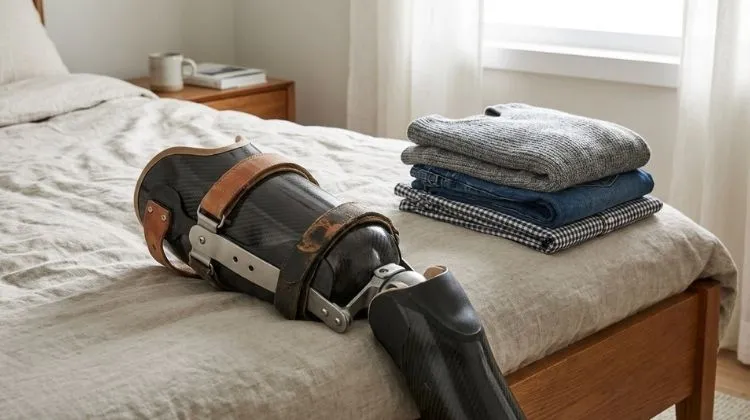
- You use a prosthetic or orthopedic device — including a wheelchair, brace, or artificial limb — that wears out, tears, or otherwise damages your clothing through normal use
- You use a medication prescribed for a service-connected skin condition that causes permanent staining, bleaching, or deterioration of your clothing
Your disability rating percentage doesn’t determine eligibility here. A veteran with a 0% rating for a service-connected skin condition still qualifies, as long as the prescribed treatment for that condition damages clothing — the rating just has to be service-connected, not compensable. What VA is actually looking for is repeated wear, tearing, snagging, abrasion, or lasting damage that ordinary washing can’t fix — not routine fading or general wear-and-tear from age.
One important limit: the device or medication has to be prescribed for a service-connected condition specifically. A back brace for a non-service-connected injury doesn’t qualify, even if it’s actively damaging your clothes.
How Much You Get, and How Often
The 2026 clothing allowance is $1,053.19 per qualifying allowance, effective December 1, 2025 (a 2.8% increase over the prior year’s $1,024.50, tied to the same COLA applied to standard VA disability compensation). It’s paid once per year, as a lump sum, tax-free.
You’re not limited to a single allowance if your situation genuinely calls for more than one:
- Different garment types: if one device damages one type of clothing and a separate device or medication damages a different type, you can receive a separate allowance for each.
- Same garment type, multiple qualifying items: under 38 CFR § 3.810, you can receive up to two allowances for the same garment type when multiple qualifying devices or medications together increase the wear or damage to that clothing.
One reduction to know about: if you’re incarcerated in a federal, state, or local institution for more than 60 days and the institution provides your clothing at no cost, your allowance is prorated — reduced by 1/365th for each day of incarceration beyond the initial 60 days.
The August 1 Deadline
This is the detail that catches the most veterans off guard: your application must be received by VA on or before August 1 of the year you want paid for. This isn’t a soft guideline — VA has denied claims filed just days after the deadline, including one case where an application received on August 12 (11 days late) was denied for that reason alone, even though the veteran’s underlying eligibility wasn’t in question.
If you’re reading this after August 1 for the current year, your application will generally be considered for the next annual payment cycle rather than the one already underway. Payments for approved claims are typically issued between September 1 and October 31 each year.
The good news: since December 29, 2022, most veterans don’t need to reapply every single year. Once your allowance is approved, it renews automatically as long as your qualifying condition, device, or medication stays the same. You only need to file again if you’re a first-time applicant, adding a new qualifying device or medication, or your circumstances have otherwise changed.
How to Apply
- File VA Form 10-8678 (Application for Annual Clothing Allowance).
- Submit it to the prosthetic representative at your local VA medical center — in person, by mail, or via My HealtheVet secure messaging where that’s supported. You can also mail it directly to the VA Claims Intake Center in Janesville, WI.
- Make sure your file documents the connection between your service-connected condition and the specific device or medication causing the damage — this is usually already on record if you’re actively being treated for the condition through VA, but it’s worth confirming before you file.
- Submit by August 1 to be paid in that year’s September-October payment window.
KEEP READING
VA Automobile Allowance and Adaptive Equipment →
Another VA special benefit allowance with its own narrow, specific qualifying conditions.
VA Special Monthly Compensation (SMC) →
SMC-K’s qualifying losses — hand, foot, or organ — often overlap with the same veterans who qualify for the clothing allowance.
VA Veterans Benefits: Your Complete Guide →
The full range of VA benefits, including lesser-known special allowances like this one.
Frequently Asked Questions
No. Even a 0% service-connected rating qualifies, as long as the condition is service-connected and the prescribed device or medication for it damages your clothing. The rating percentage itself isn’t what determines eligibility here.
Your application is generally considered for the next annual payment cycle instead of the current one. VA treats this deadline strictly — claims filed even a short time after August 1 have been denied for that year, so it’s worth marking the date rather than assuming some flexibility.
No, not since December 29, 2022. Once approved, your clothing allowance renews automatically as long as your qualifying condition, device, or medication stays the same. You only need to file again if it’s your first application, you’re adding a new qualifying device or medication, or your circumstances have changed.
Yes, in two situations: if separate qualifying devices or medications damage different types of clothing, you can receive a separate allowance for each. You can also receive up to two allowances for the same garment type if multiple qualifying items together increase the wear or damage to that specific type of clothing.
No. The device or medication causing the damage has to be prescribed for a service-connected condition specifically. A brace or medication for a non-service-connected condition doesn’t qualify, even if it’s genuinely damaging your clothing.
This article is provided by USMilitary.org, an independent educational resource. We are not affiliated with the Department of Veterans Affairs or any government agency. For official information and to apply, visit VA.gov.
