KEY TAKEAWAYS
- More than half of all veterans receiving VA health care also receive some kind of prosthetic or sensory aid service — this is one of VA’s largest benefits by actual usage, even though it rarely gets discussed as its own program.
- Eligibility isn’t the same for every category. General durable medical equipment (wheelchairs, walkers, braces) just requires VA health care enrollment and a provider’s referral. Hearing aids and eyeglasses specifically require meeting one of several narrower qualifying categories.
- There’s no separate application form. Access starts with your VA primary care provider or specialist, who refers you into the program based on your treatment plan.
- PSAS also administers several benefits USMilitary.org covers in depth elsewhere — including the clothing allowance, the automobile adaptive equipment grant, and Home Improvement and Structural Alterations (HISA).
- Coverage is genuinely broad — beyond artificial limbs and wheelchairs, it includes home oxygen, surgical implants, service dog veterinary insurance, and gender-specific items like breast pumps and pelvic floor devices.
- What Is PSAS?
- What’s Covered
- Eligibility: Two Different Bars, Not One
- The Related Benefit Programs PSAS Administers
- How to Access These Benefits
- Frequently Asked Questions
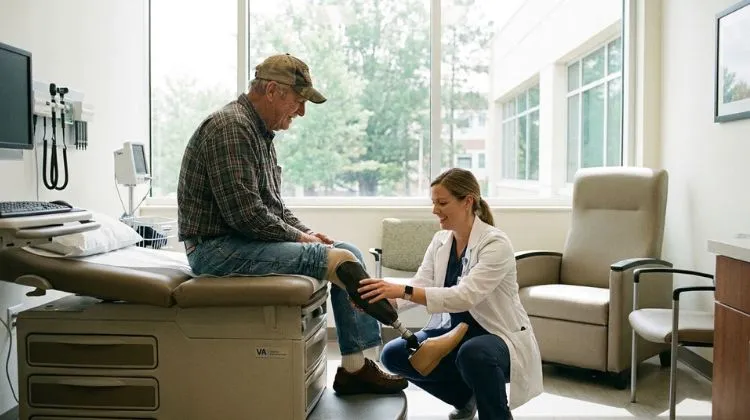
Ask most veterans what “VA prosthetics” means, and they’ll picture artificial limbs. That’s accurate, but it’s a small slice of what the Prosthetic and Sensory Aids Service (PSAS) actually does — this is VA’s largest single provider of medical equipment and assistive devices, and more than half of all veterans in VA health care receive something through it at some point. Despite that scale, it rarely gets explained as its own program, which means a lot of veterans never realize how much of what they’re using — a wheelchair, hearing aids, a CPAP machine — falls under this same benefit.
What Is PSAS?
The Prosthetic and Sensory Aids Service is the VA program responsible for providing medical equipment, assistive devices, and related support services to enrolled veterans. “Prosthetics,” in VA’s own usage, is a much broader term than the artificial-limb definition most people carry — it covers essentially any device or piece of equipment that supports a veteran’s health, mobility, or independence, prescribed as part of a treatment plan.
What’s Covered
The actual range of items and services is large enough that it’s easier to understand in categories:
TRENDING: See Today’s VA Loan Rates
- Mobility and orthotic devices: custom artificial limbs, wheelchairs, walkers, canes, orthotic braces, diabetic shoes and inserts
- Medical equipment: home oxygen and respiratory equipment, blood pressure monitors, durable medical equipment prescribed as part of your care
- Sensory aids: hearing aids, eyeglasses, and aids for blindness or visual impairment (subject to the narrower eligibility rules covered below)
- Communication and assistive technology: devices that support communication needs tied to a disability
- Surgical and clinical items: surgical implants, custom-fabricated and fitted orthotic and prosthetic devices, prosthetic item repairs
- Recreational and rehabilitative equipment: adaptive sports and recreational equipment tied to rehabilitation goals
- Service and guide dogs: including veterinary health insurance benefits for an eligible service dog
- Women veterans’ health items: including breast pumps for nursing mothers, long-acting reversible contraceptives, pelvic floor devices, and vaginal dilators
If you’re not sure whether something you need falls under this program, the honest answer is that PSAS covers a wider range of items than most veterans expect — it’s worth asking your VA care team directly rather than assuming something isn’t covered.
Eligibility: Two Different Bars, Not One
This is the detail most worth understanding before you assume you don’t qualify for something, or assume you automatically do: PSAS doesn’t use one single eligibility standard across everything it provides.
General Prosthetic Items and Durable Medical Equipment
For most of what PSAS provides — wheelchairs, walkers, orthotic braces, home oxygen, durable medical equipment generally — the bar is genuinely low: you need to be enrolled in VA health care (learn how to enroll in VA Health Care) and have a medical need or provider referral for the specific item. There’s no separate disability rating requirement or service-connection test for this broad category. If your VA care team determines you need it as part of your treatment plan, that’s generally sufficient.
Hearing Aids and Eyeglasses
This category works differently, and it’s a common source of confusion. Hearing aids and eyeglasses are only provided to veterans who meet one of these specific qualifying categories:
- Former prisoners of war
- Purple Heart recipients
- Veterans with service-connected disabilities (of any kind, not necessarily related to hearing or vision)
- Veterans with a non-compensable (0%) service-connected rating specifically for hearing loss
- Veterans who are permanently housebound, or who receive increased pension based on a need for Aid and Attendance
- Veterans enrolled in the VR&E vocational rehabilitation program
In practice, this means a veteran with any service-connected disability rating — even one completely unrelated to hearing or vision — generally qualifies for hearing aids or eyeglasses if needed, while a veteran with no service-connected rating at all and none of the other qualifying circumstances above may not, even though they’d have no trouble getting a wheelchair or a knee brace through the same office. It’s a genuinely different, narrower test than the rest of the program uses, which is why it’s worth checking specifically rather than assuming the general eligibility rule applies here too.
For hearing aids specifically, the process runs through your VA Medical Center’s Audiology and Speech Pathology Clinic — an audiologist evaluates your hearing and makes the clinical determination on need.
The Related Benefit Programs PSAS Administers
PSAS is also the office behind several other named VA benefits — worth knowing since if you’re already working with PSAS for one item, these others may be relevant too:
- Clothing Allowance — an annual payment if a prosthetic or orthopedic device is damaging your clothing
- Automobile Adaptive Equipment — vehicle modifications and the separate automobile purchase allowance for veterans with specific qualifying losses
- Home Improvements and Structural Alterations (HISA) — funding for home modifications tied to a medical need; see our VA SAH Grant guide for how HISA fits alongside the larger Specially Adapted Housing grants
How to Access These Benefits
- Make sure you’re enrolled in VA health care. This is the baseline requirement across every category PSAS covers.
- Talk to your VA primary care provider or specialist. There’s no standalone PSAS application — access starts with your care team identifying a medical need as part of your treatment plan and referring you into the program.
- For hearing aids specifically, ask for a referral to the Audiology and Speech Pathology Clinic at your VA Medical Center for an evaluation.
- If you’re not sure whether you qualify for hearing aids or eyeglasses under the narrower eligibility rules above, ask directly rather than assuming — a Veteran Service Officer or your VA care team can confirm which category applies to you.
KEEP READING
Another PSAS-administered benefit — an annual payment if a prosthetic device is damaging your clothing.
VA Automobile Allowance and Adaptive Equipment →
The vehicle-focused benefit that sits alongside general prosthetic and sensory aid coverage.
VA Veterans Benefits: Your Complete Guide →
The full range of VA benefits, including widely-used but under-explained programs like this one.
Frequently Asked Questions
No. General durable medical equipment like wheelchairs, walkers, and orthotic braces only requires that you’re enrolled in VA health care and have a medical need or provider referral — there’s no separate disability rating or service-connection requirement for this broad category.
No, and this is a common point of confusion. Hearing aids and eyeglasses require meeting one of several specific qualifying categories — former POW status, Purple Heart recipient, any service-connected disability rating, a non-compensable rating specifically for hearing loss, being permanently housebound or receiving increased pension for Aid and Attendance, or enrollment in VR&E. This is a narrower standard than the general eligibility rule used for most other prosthetic items.
No. There’s no standalone PSAS application — access starts with your VA primary care provider or a specialist identifying a medical need as part of your treatment plan and referring you into the program. For hearing aids specifically, the referral goes to the Audiology and Speech Pathology Clinic.
No. Having any service-connected disability rating — regardless of what condition it’s for — is one of the qualifying categories for hearing aids and eyeglasses. You don’t need the rating itself to be for a hearing or vision condition.
PSAS is the broader office that provides prosthetic devices, sensory aids, and medical equipment. The clothing allowance and automobile adaptive equipment grant are specific, separately-named benefit programs that PSAS administers alongside its general equipment and device coverage — they have their own distinct eligibility rules rather than following the general PSAS standard.
This article is provided by USMilitary.org, an independent educational resource. We are not affiliated with the Department of Veterans Affairs or any government agency. For official information, visit VA.gov.
